
Invisalign vs Traditional Braces: Which Is Better for Your Child or Teen?
Blog post descriptiDiscover the difference between Invisalign vs traditional braces and find out which treatment is best for your child or teen based on comfort, results, and dental needs.on.
Dr. Awanthi
12/7/20252 min read
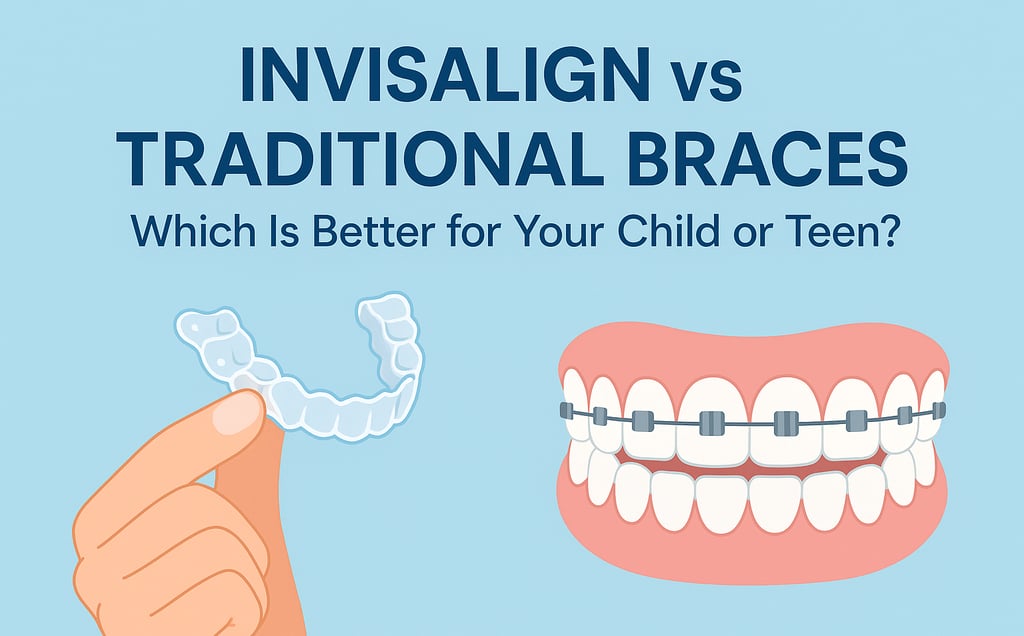
Choosing the right orthodontic treatment for your child or teen is an important decision that affects not only their smile but also their confidence and oral health. With modern dental advancements, parents now have more options than ever—especially when comparing Invisalign vs traditional braces. Understanding the benefits, comfort levels, visibility, cost, and suitability of each treatment can help you make the best choice for your child’s unique dental needs.
What Are Traditional Braces?
Traditional braces are the most widely used orthodontic treatment and have been effective for decades. They consist of metal or ceramic brackets attached to the teeth and connected by wires. As the dentist adjusts these wires over time, the teeth gradually shift into alignment. Traditional braces are especially helpful for treating severe misalignment, crowded teeth, deep bite, crossbite, and other complex orthodontic issues.
Advantages of Traditional Braces:
Highly effective for complex cases
Works for all age groups
No need for patient compliance, as they stay fixed
Can use ceramic (tooth-colored) options for better aesthetics
Disadvantages:
Visible on the teeth
Can cause mild discomfort and mouth irritation
Restrictions on sticky and hard foods
More difficult to maintain oral hygiene
What Is Invisalign?
Invisalign uses a series of clear, removable aligners that gradually shift teeth into place. Each aligner is custom-designed using 3D digital scans, making the treatment more precise and comfortable. Invisalign is especially popular among teens because the aligners are nearly invisible, making them a more confident choice for school and social settings.
Advantages of Invisalign:
Nearly invisible appearance
Removable during meals and brushing
More comfortable with no metal wires or brackets
Makes oral hygiene easier
Fewer food restrictions
Ideal for mild to moderate orthodontic cases
Disadvantages:
Requires discipline—aligners must be worn 20–22 hours daily
Not always suitable for very complex dental conditions
Aligners can be lost or damaged
Invisalign vs Traditional Braces: A Side-by-Side Comparison
FeatureInvisalignTraditional BracesAppearanceClear and invisibleVisible (metal/ceramic)ComfortSmooth and gentleMay cause irritationRemovabilityRemovableFixedHygieneEasy to brush/flossHarder to clean around bracketsFood RestrictionsNoneManyBest ForMild–moderate casesAll cases, especially complex onesComplianceMust wear dailyNo compliance needed
Which Treatment Is Best for Your Child or Teen?
The choice between Invisalign vs traditional braces depends on multiple factors:
Choose Invisalign if:
Your child wants a discreet option
They can commit to wearing aligners responsibly
Their orthodontic issue is mild to moderate
They are involved in sports or activities where metal braces may cause discomfort
Choose Traditional Braces if:
They need major tooth or jaw correction
You prefer a treatment that doesn’t rely on daily discipline
You want the most affordable option
Complex bite issues must be addressed
Both options can deliver excellent results when guided by an experienced orthodontist.
Quality Orthodontic Care at Dr. Awanthi’s Dental Clinic, Pune
At Dr. Awanthi’s Dental Clinic, your child receives personalized orthodontic care tailored to their dental needs. Whether you prefer Invisalign or traditional braces, the clinic offers advanced diagnostic tools, detailed treatment planning, and gentle care for children and teens. With expertise in smile correction and oral development, the clinic ensures safe, effective, and confidence-boosting results.